Tuesday, October 25, 2016

Things to Do Other Than Talk About the Election

Alright, folks. I've got some serious election fatigue. Apparently, we've been collectively feeling it since July. To combat the exhaustion and the emotional drain of squinting through my Facebook feed to avoid the political battlefield playing out between internet friends who have no interest in finding a common ground, I've compiled a list of things you can do or talk about other than the election. Before I share this list, however, I want to make one last plug to vote. The right to vote has not always been available to everyone in this country. Women like Elizabeth Cady Stanton, Lucretia Mott, Lucy Burns, Alice Paul and Crystal Eastman dedicated their lives to fighting for the right to vote, some of them both for themselves and also alongside the abolitionist movement (though not all of them). Some of them withstood physical and verbal abuse, imprisonment, hunger strikes and brutal force feeding in prison to assert their right to having a say in their nation's leadership. Approximately 50,000 people marched in 1965 to protest the systemic and pervasive discrimination that prevented people of color from participating in their right to vote, a right that was technically guaranteed in the 15th Amendment but was actively denied for many until the Voting Rights Act attempted to address voting-based discrimination. People have struggled, suffered and fought to have the right to vote so if you have it, please use it.

And with that, here's a list of things you can do instead of talk about the election:

  • Watch a good TV show or movie. It's almost Halloween so it's appropriate to watch Hocus Pocus on repeat. Also Orphan Black, Transparent and the obvious choices of Parks & Rec, The Office and 30 Rock are always good options. 
  • Get a massage. If you can't afford a massage, make like Chris Traeger and form a massage train with people around you. 
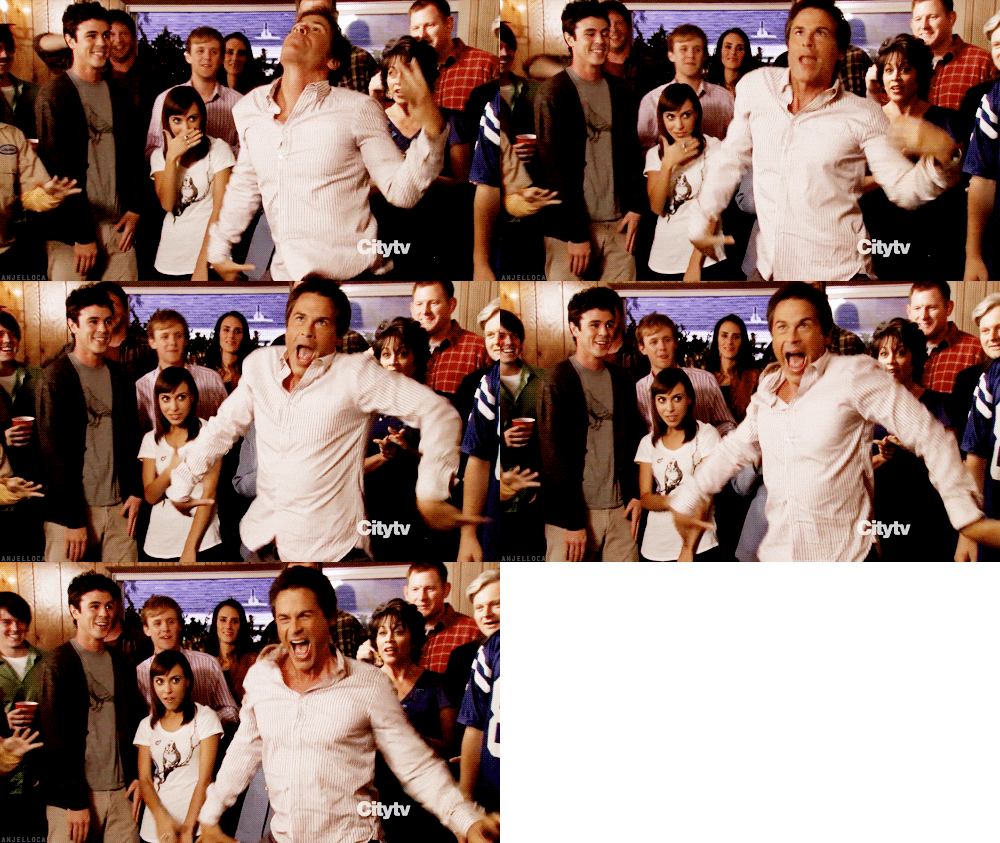
  • Also like Chris Traeger, dance like no one's watching to your favorite tunes (source): 
party parks and recreation drunk rob lowe bad dancing
  • Now that I'm thinking about it, you should probably just spend some time watching Parks & Recreation.
  • Come to my house and help me humanely handle the mouse situation that is currently terrorizing my kitchen.
  • Make yourself a nice meal. Also, make extras for me because there's a mouse in my kitchen.
  • Take some fun Buzzfeed quizzes. I personally prefer those that are Harry Potter related. This one is fun. Also this one. And this one is a given (#hufflepuff4eva).
  • You know what, while you're at it, you should probably just reread the whole Harry Potter series. Or, if you've managed to make it this far in your life without it, read it for the first time.
  • Stay off of social media.
  • If you have to go on social media, actively fight the urge to make snarky comments on other people's political posts. 
  • Go for a walk. If you're worried about seeing political signs, make yourself a Sensory Deprivator 5000. It may impact your ability to take in the fall beauty, but will also keep you election-protected.
  • Do something nice for someone else. Volunteer for a cause you care about if you have the time and the resources. Tell someone you love that you are thinking about them. Hold the door for a stranger. Generally be a decent human being to others.
  • Do something nice for yourself. The options are endless. I don't know your life.
  • Eat dessert in bed. I did this last night. It was excellent.
  • Exercise. Endorphins are awesome and it feels good after dessert in bed.
Need things other than the election to talk about? Here are some suggestions:
  • The New Yorker article about the history of the ladder
  • dorm options at Johns Hopkins University
  • Sonicare instructions
  • Accordian music
  • Old-timey car horns (please review the 4th suggestion if this list confuses you)
  • Literally anything else
If you're opinionated, if you're passionate, if you are dying to share your political views, that's cool. I am too. Just remember that there are a lot of opinions, a lot of emotions and a lot of perspectives out there. Tensions are high and people are tired. I'm tired too. Let's try to be kind, respectful and decent to each other. We still have to live with each other after November 8.

Tuesday, October 18, 2016

New Season Idea for American Horror Story: Election 2016

Like probably most people, I’ve been equal parts obsessively reading about the upcoming election and trying to avoid looking at any of it. It’s like watching a scary movie. Except this scary movie is real life and it seemingly won’t end. I’m exhausted reading about it – and honestly exhausted talking about it – but I have to get a few things off my chest because this election season hurts, and I know it’s not just me that feels it. 

I felt it during the primaries when the calls about Hillary Clinton were coming from inside the house; when she was lambasted for “playing the game” and being “too establishment” even though every president to date - and honestly probably every politician -  has played the game. I understand anti-establishment folks’ frustration with that, I truly do, and I don’t blame people for passionately wanting to change things up. I also would love to change things up. However, these comments also rang dismissive and patriarchal in a way that hit me in the gut. It would be impossible for a woman to make it as far as HRC in her political career without playing the game. Because of obstacles put in place by centuries of patriarchal rule, she would have to play the game harder and faster than any of her male counterparts to even make it through the metaphorical door. There is no female Bernie Sanders on the political main stage right now because if a 75 year old woman with very little regard for her appearance who openly identified as a democratic socialist tried to run for president, she wouldn’t even be considered. I’m not criticizing Sanders supporters. I like Bernie Sanders too. But I was also struck by the unbelievable double-standard reinforced in the public rhetoric and the frustration I personally felt. As a woman, I’m not embarrassed to say that I was pumped as hell to have a well-vetted, educated, prepared and seasoned female candidate in the running but I also knew it was only the beginning. Note: if you read that last sentence and said to yourself "HRC is a 'criminal'/'liar'/'predator'/'murderer,'" this may not be the post for you. You are entitled to your opinion as much as I am and I respect that. Please do the same for me. If you really don't like this, don't read it.

And only the beginning it was indeed. After the primaries shit has really hit the fan. I am truly astounded every day when I read the news, look at Facebook or basically do anything that involves other people. Political leanings aside, the aggressive, hypocritical, violent and hateful narrative being emphasized this season has made me withdraw because I can’t. I can’t engage in a discussion about politics because so much of what is being said invalidates my very existence (this link goes back way farther than the election but you get the picture). I can’t be excited or happy that it is very likely we will have the first female president in office because the hateful and hurtful environment fostered in this election has taken that joy away from me. I feel acutely aware of how difficult it is for women (and this is a cisgender, heterosexual, upper-class, white, Christian female– arguably the most privileged position that someone identifying as a woman can hold) to meet the standards set up for us and am overwhelmed by how much work there is left to do to create a supportive and affirming society.  I can’t think about this topic without feeling disheartened, sad and sick to my stomach because I know I’m far from the only one effected. The xenophobic, Islamophobic, classist, ableist and racist messages permeating this election hurt so many. It’s estimated that 8 million adults in the US identify as LGB, 3.3 million people as Muslim, 1.4 million people as transgender, 55 million people as Latino/a/x, 42 million people as Black or African American, 27 million people live with a disability under the age of 65, 43 million people live below the poverty line and 41 million people are foreign-born (Source - this doesn't include considerations for intersectionality). That's a whole lot of people. What are we as a nation telling all of these people by even giving these messages a platform? What is the lasting impact of legitimizing claims that immigrants are criminals (studies have shown that they aren't), building walls will solve problems (it won't) and that the country should be run like a corporation (it shouldn't and many people might suffer if it was)? People who work in, live in and love this country are being assaulted by messages that tell them they are not welcome, not wanted and not supported by the country they belong to and call home. A country, by the way, that was founded on principles of freedom of religion and freedom of speech (including the freedom to protest) and a judicial system based on the mantra "innocent until proven guilty," but I digress. This election will come and go but the impact will continue. Therapists are legitimately worried about our mental health, bullying has increased and distress is climbing. 

I can't wait for this election to be over. I'm tired of continually feeling hurt, upset, angry and disheartened. But I will be able to return to my largely privileged existence fairly easily. I'm sure I will still feel the ripples of misogyny, hate and ignorance but, to be truthful, that's neither new nor solely or even primarily attributable to Trump. He has, however, verified and publicized the existence of issues women have long been speaking out about. But this isn't just about me. Maybe it isn't even about me at all. I'm tired but I feel the need to take one more public stand to say I don't subscribe to the idea that separation is the answer and I will not sit quietly while hateful rhetoric threatens to overwhelm my view of the country I live in. I will stand with those who are actively fighting to make this country better tomorrow than it is today through activism and advocacy and I will use my voice and my privileged position to do what I can to support them. Most importantly, I will vote for the candidate that I believe will best represent the needs of my country and the people in it. Please do the same, even if you disagree with me on who that is. Seriously people, vote.

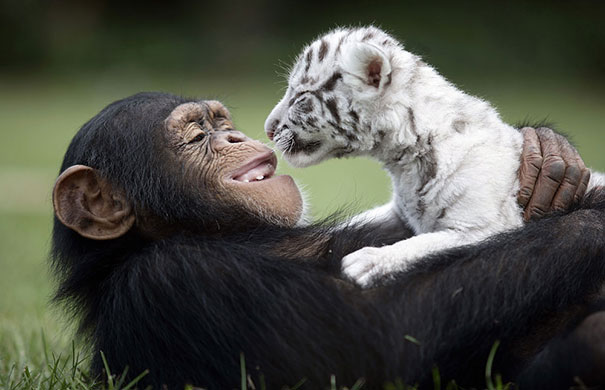
With that, here's a photo of a chimp and a tiger being BFFs because it's awesome and, if they can do it, so can we.

Thursday, October 13, 2016

Where Are the Men? Pussygate and the Bystander Effect

I had to take some time away and now I'm back and trying to avoid a rage spiral. Like many people, I was really supremely pissed when I heard the recording of Donald Trump and other men saying sexually aggressive and demeaning things about women. I'm mad as hell, but likely not for the reason you might think. Obviously what he said was disgusting and degrading. This point has been made and I don't need to spend too much time covering it. However, as I'm processing my thoughts about everything going on, I can't help but ask myself: where were the other men?

What Donald Trump said is par for the course, not just for him but for many men. When he responded to the criticism by saying it's "locker room talk," unfortunately, I know what he means and I think some athletes who are clapping back by saying "that's not what we talk about in locker rooms" are missing the point (though, arguably, many are not). It is no secret that many cisgender,*  heterosexual** men say derogatory, violent or degrading things to and/or about women around other men. Women, arguably, do this too. Society has normalized violent and derogatory language so much that it has become a part of our everyday vernacular. However, due to the power structure in play in a patriarchal environment, the implications for men using this type of language towards and against women are dangerous and scary. I have been both a witness to and a subject of this behavior and can attest first hand that the significant impact these words and actions have is very real. When a man (in my case this has been almost exclusively white, heterosexual, cisgender males) makes a comment that is violent, derogatory or degrading to me, even if he thinks he is joking, the messages I receive are that my body is something to be objectified and sexualized, my emotional and physical safety are not valued, my voice is not important. At that point, it is clear to me that no matter what I say or how eloquently I address the issues at hand, I have lost the conversation. I am not a person of value in the eyes of the speaker and anything I say, no matter how well-articulated, will be invalidated. It's times like these that I find myself looking around wondering, where are my allies? Where are all the men?

Why is it that groups of intelligent, kind, smart, aware people don't feel comfortable, confident or able to have open conversations with their friends about these social issues? I believe that this is due, in part, to the bystander effect. This concept suggests that people are less likely to step in when there are other people present, most often because of social pressure and a perceived diffusion responsibility (the thinking of "no one else is saying anything so why should I?"). So basically, even if one of the men in that van with Trump was uncomfortable with what he was saying, the desire to fit in, not make anyone else uncomfortable and not heighten his own discomfort seems to have trumped (PUN!) the desire to speak up.

It's important to me to note here that I am not blaming men, or anyone, for the bystander effect. I have been an inactive witness to injustice before and understand that speaking out is not as easy as just saying "what you just said reinforces an oppressive patriarchal/heteronormative/white dominant/classist/ableist/cis-gendered social structure and is disrespectful to women/people of color/people who identify as gay, lesbian, bisexual, asexual/people of a lower SES/people who identify as disabled/people who identify as transgender, genderqueer, gender fluid, intersex/etc.." Because that's an easy cool statement to make when someone makes an inappropriate joke at a dinner party, I know. As a woman who holds many privileged identities, I also have to be accountable and figure out how to have similar conversations with people I love, care for and respect. I have to consider how to use my positions of privilege to work towards allyship without coming across as the "social justice police" or projecting some sort of moral high ground (which I certainly do not feel). Call-out culture has its own issues and difficulties and I'm not suggesting that we all go out and start pointing fingers and making people feel bad for making a mistake or being at a different stage of awareness. What I am suggesting is that words are powerful and letting someone know you have their back means something. As an outspoken and opinionated feminist, I have encountered many men who want to talk to me about feminism - some of whom try to tell me what feminism is and is not (*insert side-eye emoji*) but most of whom want to talk about what they can do and how they want to be a part of a culture that recognizes women as equals. I will tell you what I tell them: talking to me about it is great, I love it and I want to support any person who believes in gender and sex equality. But talking to me about feminism, in my humble opinion, isn't enough if you want to make a difference. Talk to your male friends about it. Let them know verbally, and with kindness, when their jokes, words or behaviors reinforce oppressive ideals. Don't put it in the context of "wives" or "sisters" or "mothers" -  my value as a woman does not rest on my relation to other people - but say it from your own perspective. If you truly believe in gender equality, this type of behavior is an affront to your beliefs and values as much as mine. You are in a unique position to make a difference. If you feel safe, please take it.

If you want to learn more about this:, Jackson Katz is an excellent resource. Here's a TED talk he did about male accountability and violence against women.

In closing, here's a quote from bell hooks, one of the most awe-inspiring scholars and writers I've come across:

After hundreds of years of anti-racist struggles, more than ever before non-white people are currently calling attention to the primary role white people must play in an anti-racist struggle.  The same is true to eradicate sexism - men have a primary role to play...in particular, men have a tremendous contribution to make...in the area of exposing, confronting, opposing and transforming the sexism of their male peers.
*mic drop*

*I don't have the experience or knowledge to speak to transgender men in this case, though I imagine their lived experiences and intersectionality would make this conversation quite different and don't want to assume universality for all men.

**Again, I don't have the experience to speak to this issue outside of a heteronormative framework. I do not want to reinforce heteronormativity and am, unfortunately, limited in the scope of my lived experience in this case.

Friday, September 23, 2016

Intersectionality Pt 1 - What It Is

Recently, people have asked me what I mean when I used the word "intersectionality." Intersectionality is a word I have mentioned on this blog before and it comes up often in my work as a graduate student. Having spent years working to understand it, I may have forgotten that not everyone spends their weekdays nose-deep in articles. I thought it might be helpful to try to explain what intersectionality is because I believe it explains a lot regarding the way I view the world and look at sociopolitical issues. Based on a basic Google search (what did we do before Google? Read books? At libraries?), here is the definition that comes up:
in·ter·sec·tion·al·i·ty

ˌintərsekSHəˈnalədē/ <---- this is super helpful, right?
noun
  1. the interconnected nature of social categorizations such as race, class, and gender as they apply to a given individual or group, regarded as creating overlapping and interdependent systems of discrimination or disadvantage.
    "through an awareness of intersectionality, we can better acknowledge and ground the differences among us"

Ok, so what exactly does that mean? As human beings, there are many (many many many) factors that come together to make us who we are and that create the lens through which we see the world and also impact the way the world sees us. Intersectionality argues that systems of oppression, also sometimes referred to or expressed as -isms (racism, sexism, ableism, heterosexism, etc.) do not exist in a vacuum. Instead, these systems intersect (see what they did there?) to create complex and multidimensional forms of oppression and discrimination.

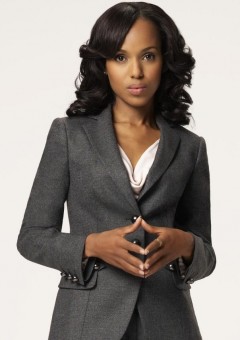
For example, let us consider Olivia Pope. This is Olivia:
Image source
Image source]

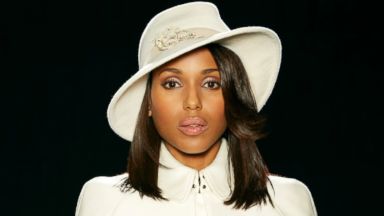
Olivia is a lawyer and Washington, DC "problem solver." She's also (mostly) fictional and the best dressed woman in DC. Here she is in an amazing white hat:


Olivia Pope identifies as both a cisgender female and, though I don't know for sure how she racially and/or ethnically identifies, for the sake of this explanation let's assume she identifies as African American. Living in the US, we know sexism exists. We also know that racism exists.  Intersectionality suggests that, for Olivia, racism and sexism will overlap and interrelate and create systems of oppression unique to cisgender females who identify as African American. But we can't stop there because we also know that not all cisgender females who identify as African American have the same experiences with oppression; identities are more complicated and complex that just gender, biological sex and race. 

Now, when talking about Olivia, she also has several privileged identities including education (she is a well-educated lawyer), socioeconomic status (said law degree, upbringing, and general brilliance and badassery has led her to financial success. Her apartment is bonkers), sexual orientation (she has amorous relationships with the most powerful men in the world so she's doing alright for herself), ability status (she presents as physically able-bodied and does not appear to have a mental or developmental disability), and gender identity (her gender and biological sex identities correlate). These factors, in addition to many others, will impact how Olivia experiences oppression and discrimination. Now, many of these privileged identities are also shared with Mellie Grant, fellow Scandal character. Here's Mellie:
Image result for mellie scandal

Intersectionality suggests that, even though Olivia and Mellie have many similar identity factors (both well-educated, wealthy, heterosexual, cisgendered and able-bodied), the experiences of -isms, which for the sake of this example are being focused on sexism and racism, will be different for both women. Dominant gender and racial expectations, stereotypes, misconceptions and narratives intersect, intermingle and work together to create complex and multidimensional systems of oppression that are disparate between individuals with the same gender-identity and different racial identities, as well as any other combination of identity factors. It's important to note here that intersectionality transcends race and gender identities. It has historically been applied to race and gender but I believe it can be related to all intersections of oppression (ableism and heterosexism, classism and xenophobia, etc.).

 Another excellent example and one of the moist poignant demonstrations of intersectionality to me is Sojourner Truth's "Aint I A Woman" speech. Though the exact verbiage she used has been contested, Sojourner Truth pointed out elements of intersectionality long before their time. In this speech, she is highlighting that, although she identified as a woman, the societal expectations for her, having been born into slavery, were considerably different than for white women. 

This is been a not brief and not perfect explanation of what intersectionality is. Next up, the why it's so important.


Wednesday, September 21, 2016

Black Lives Matter and White Accountability

For today, I had written a post on intersectionality. I had spent a lot of time on it, used a lot of references to Scandal and was excited to share it. But I won't be sharing it today because I received this email from the group Showing Up for Racial Justice this morning:

"This week Terence Crutcher and Keith Lamont Scott were murdered. Since San Francisco quarterback Colin Kaepernick began his on-field protests, at least 15 Black people have been murdered by the police. As we continue to see racist violence unfold on our TV screens and social media feeds, it is more important than ever for white people to loudly amplify the calls for justice that are reverberating throughout the country."

Colin Kaepernick started his protests just 4 weeks ago. My heart is heavy and my Facebook newsfeed is packed with outrage, leading me to question what I can do. As a person who identifies as white, I am acutely aware of the intricacies and inequities involved in amplifying the Black Lives Matter movement. I cannot make the BLM movement about me, as people in positions of privilege often do in activism. I must find a way to amplify the voices of the movement without appropriating them or talking over them. And, though it pains me to say, I have benefited from the same systems the movement is fighting. That doesn't mean I don't want to fight them too. I believe in the Black Lives Matter movement because I believe that all lives matter and the systems in place in the United States do not adequately or accurately reflect that. Even though white people are more likely do drugs, people who identify as Black and African American are 3 times more likely to be arrested for drug possession. Americans who identify as Black and African American and are unarmed are 5 times mores likely to be shot by police that unarmed White Americans. These are not issues of individual "crooked" cops or crimes, these are large-scale social problems and people are dying - at least 1 every 2 days for the last 4 weeks - as a result.

So what can I do? Truthfully, I often feel overwhelmed and intimidated when faced with such an enormous and pervasive issue. That being said, to take a back seat, to be silent or go along with my everyday routine pretending I don't see and hear what is happening is an overt reflection of my racial privilege. As a white person, I experience a certain amount of safety and security - one that allows me the semi-comfort of even starting this blog. As a white person, I need to hold myself accountable for using that privilege to speak up and speak out, to amplify the voices that deserve to be heard and to educate my fellow white peers about their own accountability. In his book Between the World and Me, Ta-Nehisi Coates writes that it is not his responsibility to educate white folks about racism and white privilege. I agree wholeheartedly with this statement. It is unreasonable to expect people who are actively fighting systems of oppression while simultaneously enduring the weight of them to educate those who benefit from them and are often blind to their very existence. That being said, I've done some research and here are some resources and things you can do right now to support systemic change and educate yourself:

1. Learn about the Black Lives Matter movement. There are a lot of misconceptions about what the movement actually is and what it stands for. Educate yourself and then share that information with others around you. Saying "Black Lives Matter" is not saying "Black Lives Matter more than white lives" or "police lives." Understanding the movement is a good first step in understanding how to support the change it calls for. Knowledge can ripple out and be extremely powerful when used correctly.

2. Support organizations that are working tirelessly to influence change. The Black Lives Matter website has a whole section on ways to get involved. Showing Up for Racial Justice's whole website is structured around explaining different ways to support racial justice. If you don't want to physically get involved, donate a few dollars or share the information with others who might be interested. 

3. Listen. As a person who identifies as white, I know that sometimes conversations about racial inequity can lead to a defensive reaction. Our society teaches us that, even though prejudice and racist ideas are embedded within us due to social and cultural messaging, being "a racist" is bad and wrong and even admitting or acknowledging having experienced racial privilege is some sort of moral indictment on you as an individual. This is false and, while we are working through our feelings of guilt or shame, people are dying. There are advocates and activists who are openly telling us what they need and it's time for us to listen.

I know that most of this is not likely new information. I truthfully hope that it's not. But, as I said in my very first post, I believe that silence is compliance and it's past time for white people to stand up. That being said, I am not "Ms. Social Justice." I often feel inadequate, unprepared and insecure about my ability to support systemic change. I will say things incorrectly and make mistakes and it's possible I will do so publicly. I won't deny that speaking out can be scary and overwhelming. However, the fear of a negative response, a nasty note or confrontation from a Facebook friend or peer, pales in comparison to the risks activists are taking every day, often putting their lives on the line to pursue justice for those who have been killed. My fear and my safety are not more important than theirs and, though the risks I face are considerably and notably less dire and severe, risks are what is called for now. 

Wednesday, September 14, 2016

Breaking News: Rape Jokes Are Not Funny

So, it hasn't even been a week and news from the University of Richmond strikes again. This time, the issue is around an email sent by a member of a fraternity that includes derogatory and bizarrely threatening language about women. You can read more about the incident here but, to sum it up, the fraternity member ended an email promoting an upcoming party with the line: "Tonight's the type of night that makes fathers afraid to send their daughters away to school." Yuck. Also, huh? What is that honestly supposed to mean? Is this some horrifying party theme I'm not aware of? Is this actually a selling point for getting people to come to parties now? I personally prefer a heavy snack selection as a party incentive so this is a wholly new concept to me. 

But seriously, and unfortunately, this language and this idea are not actually new to me. In fact, something very similar happened when I was in college. Though I was disgusted and disturbed at that time, I was very aware of the negative and degrading ways in which women were written about in fraternity emails and was riding the "freedom of speech" train, and also the restorative justice train, though I didn't know it at the time. I know a lot more now and I want to make a very controversial and shocking statement: I do not find jokes or statements about rape, or any violence towards another person, to be funny. *gasp* I think they often normalize or minimize events that truly hurt and impact people on a daily basis and, frankly, I don't think that's very nice. I know that sometimes people who have experienced violence will use humor to deflect and protect themselves and I get that. I just wish that we made it easier to talk about these things so people wouldn't need such a defense against their own experiences.

I hear all the time (seriously, all.the.time), that jokes are just jokes and I'm being too sensitive or need to lighten up so I wanted to address that here. Firstly, I am a sensitive person. I cry during live performances because I'm happy for the performers that they are so talented. I'm not going to hide that fact and I'm not embarrassed by it. But, to be clear, not finding humor in jokes or statements that threaten the safety and worth of others is not a reflection on my sensitivity. I believe that the whole "too sensitive" argument is simply a way for people to deflect personal responsibility for their own stuff. It's a way to blame me for your transgression. 

Secondly, it's important to note that jokes are rarely just jokes. I have been both the target of and the audience to violent statements against people who identify with historically marginalized groups (this includes women but is not exclusive to women. Also, intersectionality exists, people.). Even though it may not be the intent of the speaker, comments, statements and quips that include elements of violence are often vaguely-to-overtly threatening and usually silence the targeted people by stripping them of their validity and sending the message that the speaker does not respect them and likely will not hear anything they have to say. To say "it was just a joke," is to deny the experience of others who are saying it is much more. It is placing the opinion and viewpoint of the speaker over those of others and is reinforcing power dynamics that have been prevalent in the U.S. since the first European ships landed on what is now called the Americas. Isn't it time we move forward from that?

Finally, and perhaps most importantly, I think it is ok, and actually crucial, to admit our mistakes. I have done and said things I regret. I have hurt people unintentionally and tried to defend myself on many occasions. I don't think this makes me a "bad" person - though I don't actually think that's a thing; but I'll get to that later. In the U.S., we live in a society where messages about power and privilege are embedded within us and sometimes come out in ways we do not intend. Even the most sociopolitically aware individuals (among whom I am most certainly not) will say that learning about social justice, equality and the ways in which oppression manifests itself in society is a continual, lifelong process. My hope is that the individual who wrote that email will learn from this mistake; not to not write things like that down, but to understand why it is harmful to others to think those things at all. It is possible that the author of that email, as well as the other people in my life who have said similar things to me, did not mean for their words to have the impact that they did. I recognize that and truly believe that there is often space to move forward in understanding and awareness instead of always placing blame. We are all going to make mistakes, hurt and offend people and I truly believe that we owe it to ourselves and others to admit it and learn from it instead of creating excuses to justify our actions. There is a lot of power in saying "I'm sorry I hurt you. I hear you and I will do better." Though it sucks to admit to ourselves that we've hurt someone, particularly when we didn't intend to, taking 5 seconds to say this, or I suppose text or Snap for all those millennials out there, can be incredibly healing and meaningful. 

Monday, September 12, 2016

Follow-Up from My First Post

I want to say thank you to everyone who has reached out to me through Facebook, text, phone call, in person, etc. about my first post. I am unbelievably grateful for the support, as well as deeply saddened by how many people reached out to tell me that their experiences were similar to my own. It's no surprise to anyone who knows me well that I cried many times over the weekend (mostly tears of gratitude) and I'm excited to channel that emotion into something that is hopefully meaningful.

That being said, there are a few points I want to make about my previous post. Firstly, I wrote that from my perspective and my experience. As a White, cisgendered, heterosexual female, I recognize that issues around interpersonal violence, consent and autonomy over one's body are not limited to the scope of my personal perspective. These issues are not experienced equitably among all identities and I want to be sure not to suggest that they are all the same for everyone or reinforce White-centric, heteronormative or transphobic ideas. Feminist history is laden with messages that do not adequately address diversity in the context of equality (i.e. equality does not equal sameness). A great piece that touches on this is here. Though I do believe that interpersonal violence is a gendered issue, I think it's important to note that gender and power manifest themselves in a variety of ways. To highlight how deeply interpersonal violence impacts individuals who identify as LGBTQ, people of color and people living with physical and mental disabilities, I've included some information below (A note: I am aware that it is possible to claim many and/or all of these identity factors. Unfortunately, intersectionality doesn't currently play a prominent role in research of this type). While it's important to me to share my story and my perspective, I think it is crucial to recognize and talk about equality and oppression in a way that does not assume sameness or place my story and my experience above those of others.

Finally, I am interested in your feedback. I have lots of ideas of things to talk about and want to hear from you (aka my family who will likely be the only ones reading this...) about what you want to see.  Send me a message, leave a comment or just tell me in person if there's something you'd like to see discussed or you'd like me to research.

Regarding interpersonal violence and individuals that identify as LGBTQ, the CDC's National Intimate Partner and Sexual Violence Survey found:
  • 44% of women who identify as lesbians and 61% of women who identify as bisexual experience rape, physical violence or stalking by an intimate partner, compared to 35% of women who identify as heterosexual.
  • 26% of men who identify as gay and 37% of men who identify as bisexual experience rape, physical violence, or stalking by an intimate partner, compared to 29% of heterosexual men
  • 46% of women who identify as bisexual have been raped, compared to 17% of women who identify as heterosexual and 13% of women who identify as lesbians.
  • 22% of women who identify as bisexual  have been raped by an intimate partner, compared to 9% of women who identify as heterosexual.
  • 40% of men who identify as gay and 47% of men who identify as bisexual have experienced sexual violence other than rape, compared to 21 percent of heterosexual men
  • Among transgender racial minorities, 24% of transgender American Indians, 18% of transgender people who identified as multiracial, 17% of transgender Asians, and 15% of Black transgender respondents experienced sexual assault in K-12 education settings – much higher rates than students of other races. Transgender women respondents experienced sexual assault more often than their transgender male peers.
Source: http://www.hrc.org/resources/sexual-assault-and-the-lgbt-community

Regarding women of color*:
  • An estimated 29.1% of women who identify as African American are victimized by intimate partner violence in their lifetime (rape, physical assault or stalking). 
  • Women who identify as African American  experience intimate partner violence at a rate 35% higher than that of females who identify as White, and about 2.5 times the rate of women of other races.
  • In an Asian and Pacific Islander Institute on Domestic Violence survey, 41-60% of API respondents reported experiencing DV (physical and/or sexual) during their lifetimes. 
  • Project AWARE’s (Asian Women Advocating Respect and Empowerment) 2000-2001 survey of 178 API women found that 81.1% reported experiencing at least one form of intimate partner violence in the past year. 
  • According to the National Violence Against Women Survey (NVAWS), 23.4% Hispanic/Latino females are victimized by intimate partner violence (IPV) in a lifetime, defined by rape, physical assault or stalking.
  • 48% of Latinas in one study reported that their partner’s violence against them had increased since they immigrated to the U.S
*This does not address all racial and ethnic identities. I am aware of this and will hopefully be able to find more information in the future.

Source: http://www.doj.state.or.us/victims/pdf/women_of_color_network_facts_domestic_violence_2006.pdf - NOTE: This information is from 2006. Though I'm sure more recent information is available, I wasn't able to find it.

Regarding people living with disabilities:
  • Domestic violence is considered to be the #1 issue nationwide
  • 80% of women living with disabilities have been sexually assaulted
  • Rates of abuse for both men and women living with disabilities have increased from 31%-83%
Source: http://www.bflnyc.org/about-us/domestic-violence-disability/